
What to consider for your home
U-factor describes heat transfer; a lower figure indicates less heat passing through under the rating conditions. Solar heat gain and visible transmittance address different questions, so orientation and desired daylight still matter.
Ask for the certification or rating record that applies to your exact configuration. Do not assume that every size and glass combination has the same rating. Energy savings also depend on the existing windows, the home and how it is used.
Your specification checklist
- Frame and glass working together
- Applicable whole-window ratings
- Room orientation and comfort goals
- Air sealing at installation
Turn the information into a practical choice
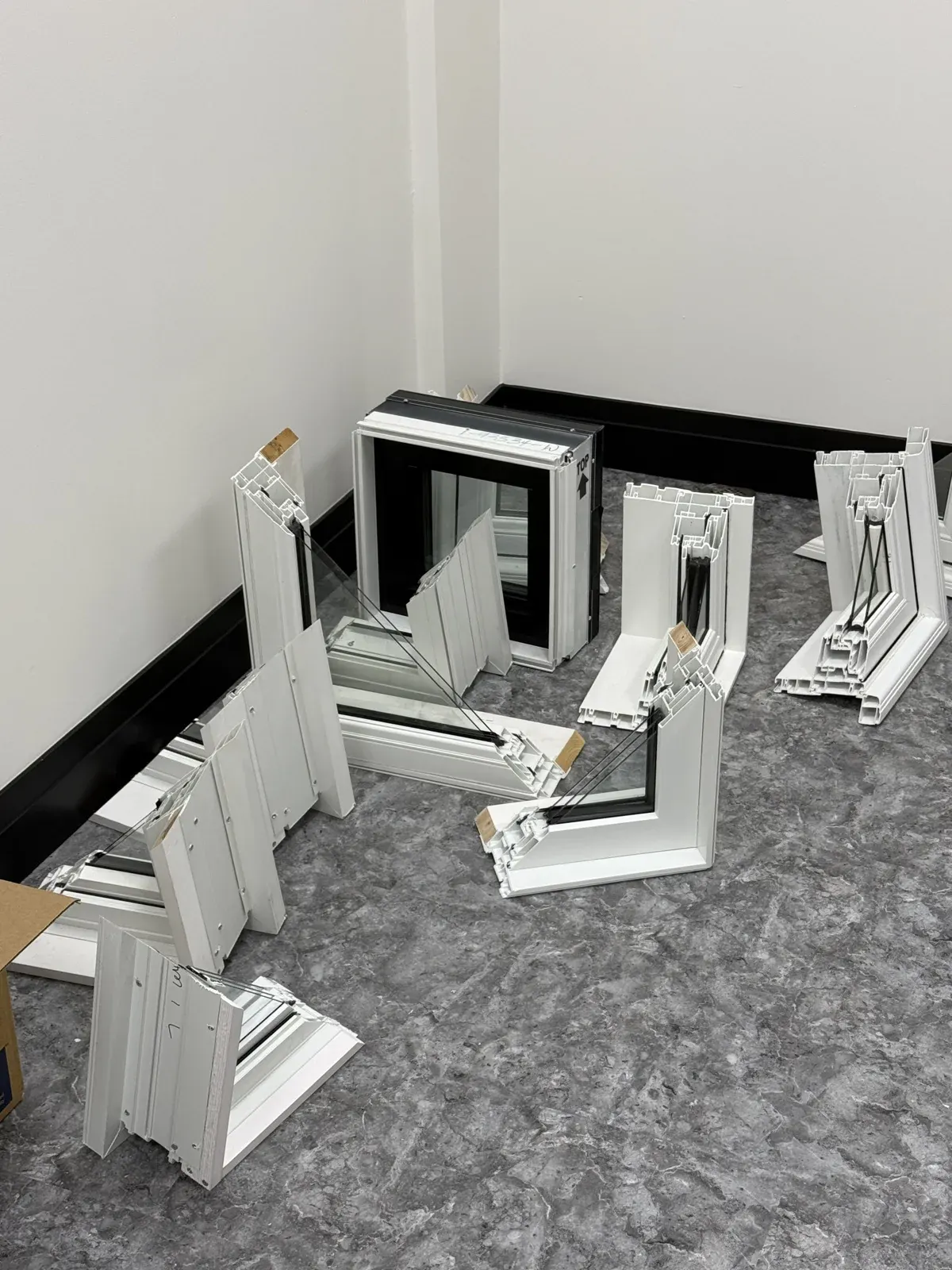
Bring room photographs, approximate opening dimensions and the questions that prompted your project. In the showroom, compare physical samples rather than judging the product from a screen alone.
The home estimate connects those choices to the existing opening. A complete quote identifies the selected configuration, installation method and finishing, so you can compare like with like.
Read the label as a complete specification
For a Canadian comparison, keep the rating system and units consistent. U-factor describes heat transfer; a lower value indicates less transfer. SHGC describes the fraction of solar heat admitted. Energy Rating combines heat-transfer, solar-gain and air-leakage information. Visible transmittance describes visible light. These measures answer different questions.
Ask for a whole-window record matching the frame, operating type and glazing. A centre-of-glass value describes a smaller part of the assembly. A number from a fixed window should not be assigned to a casement simply because the glass package has the same name.
Begin with the room: where you sit, when direct sun reaches the glass and which problems you notice. Lower solar gain can be useful where unwanted sun is a concern, but the best selection also considers orientation, shading and daylight. There is no single glass upgrade that fits every room equally well.
Specification checklist
| Decision | What to establish |
|---|---|
| U-factor | Compare identical units and whole-product records. Do not mix W/m²K with Btu/h·ft²·°F. |
| Energy Rating (ER) | Use the rated configuration; it is not a promised percentage reduction in bills. |
| SHGC | Consider the room’s sun exposure and shading alongside heat-transfer performance. |
| Visible transmittance | Compare daylight and the appearance of the glass on a sample. |
| Certification | Match the model and applicable record; annual designations must correspond to the correct year. |
| Installation | Assess the frame-to-wall connection independently of the product label. |