
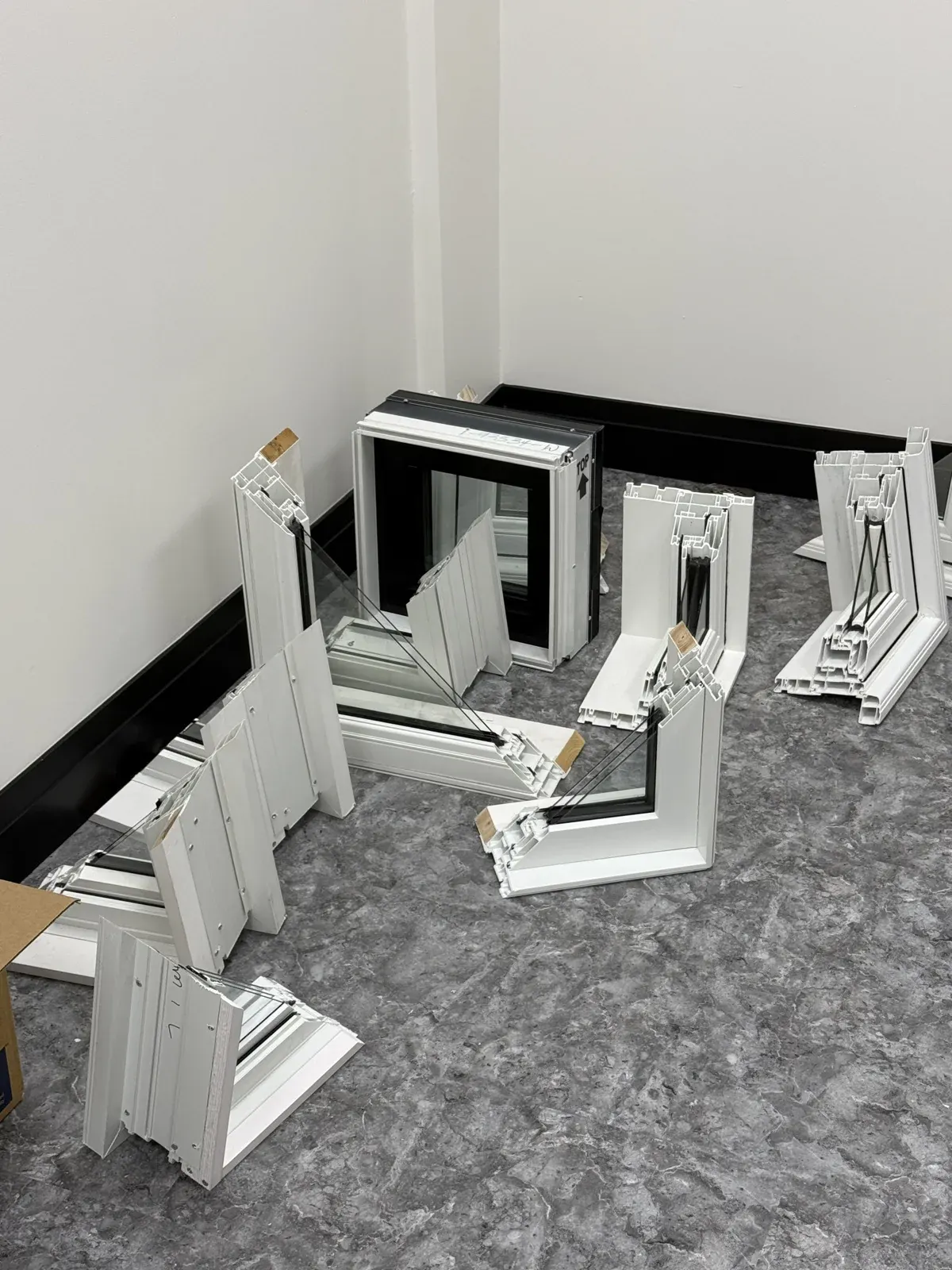
Double-pane and Triple-pane: the differences
| Question | Double-pane | Triple-pane |
|---|---|---|
| Construction | Two panes and one sealed cavity | Three panes and two sealed cavities |
| Hardware load | Lower glass weight for an equivalent size | Higher glass weight; compatible support required |
| Thermal comparison | Review the exact whole-window rating | Review the exact whole-window rating |
| Budget decision | A baseline to compare against | Evaluate the upgrade for exposure and comfort |
| Fit | Check approved size range | Size limits can differ from double glazing |
Choose for the actual opening
Start with the rooms that prompted your project. A cold-feeling seating area, a large exposed opening and a small utility-room window do not present the same decision. Ask how each package changes the performance rating, visible light and total installed price.
More panes do not automatically mean a guaranteed energy saving or noise reduction. Coating selection, spacer, frame, installation and the original window condition all affect the result. Use comparable product data rather than a pane-count shortcut.
Bring your comparison into the showroom
Bring a photograph of the room and note what is not working now: light, airflow, access, appearance or comfort. A useful consultation narrows the options using those priorities instead of adding every possible upgrade.
Once the configuration is chosen, review dimensions, glass, finish, hardware, installation and finishing on the written quote. Equivalent scope is the basis of a fair price comparison.
Apply the comparison to a real room
For a living room with seating close to a large window, price the same opening with both glass packages. Compare the whole-window values, visible light and any difference in approved dimensions. Then repeat the exercise for a smaller opening before deciding whether the same upgrade belongs everywhere.
A glazing upgrade can be worthwhile for a defined comfort priority, but it should not consume the budget needed to address damaged framing or incomplete installation work. Separate those parts of the estimate so you can evaluate the product and the surrounding construction independently.
Make the two quotes comparable
| Check | How to compare |
|---|---|
| Same opening | Use identical frame dimensions and operating style. |
| Same glass options | Identify differences in coating, privacy or safety glazing. |
| Same scope | Keep colour, trim, removal and replacement method constant. |
| Different weight | Confirm whether hardware or size limits change. |