
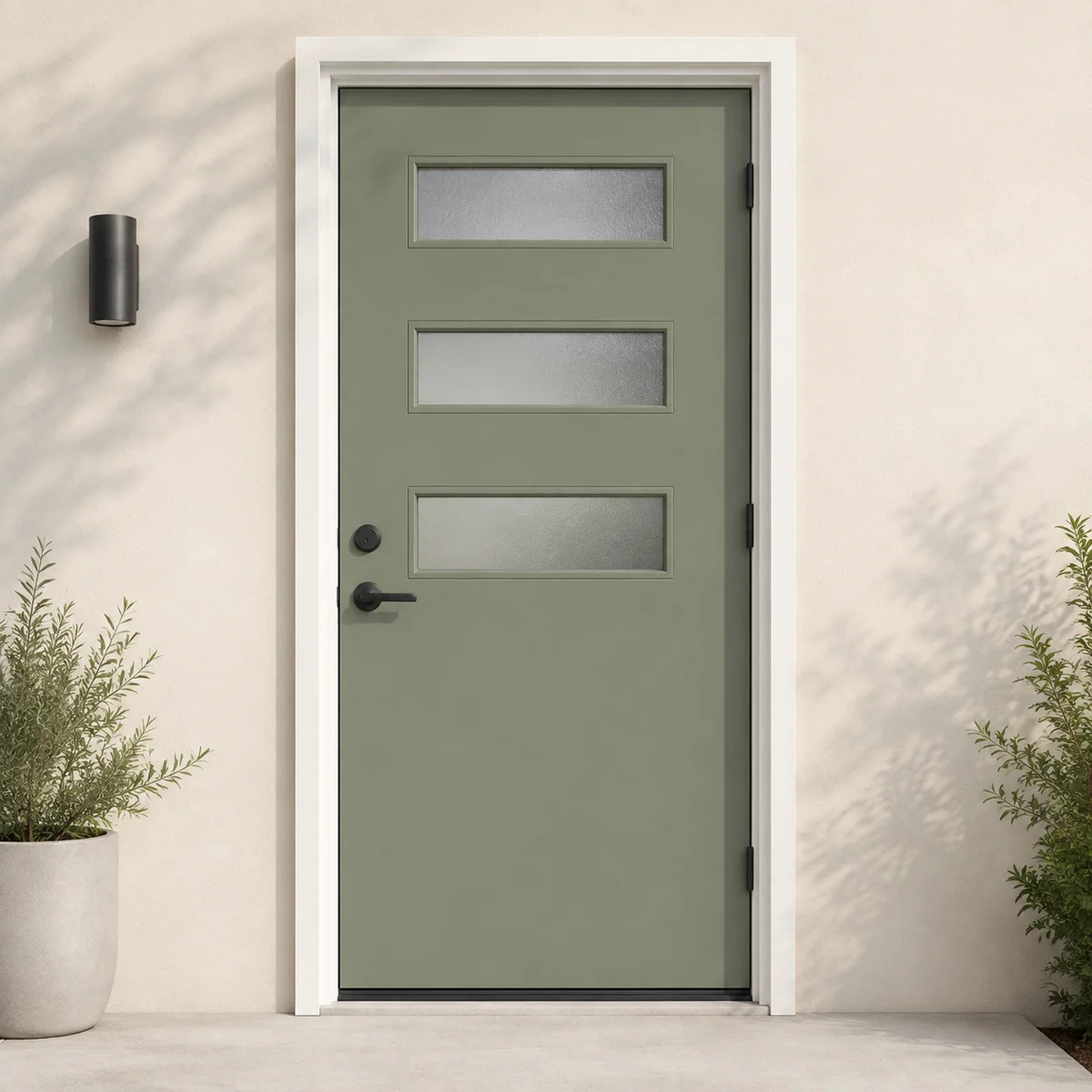
From style to a specific door
Use contemporary steel as the start of the design conversation, not a substitute for an exact model. Compare the door drawing, panel dimensions and glazing arrangement at the size proposed for your opening.
Refine the contemporary design
A contemporary steel entrance can use a straightforward painted panel as the background for a more expressive glass choice. Select the feature you want noticed first, then compare the other components at the same scale. An elaborate insert does not require equally prominent handles and trim.
If the existing house combines several exterior materials, view the proposed steel finish beside them. A sample may read differently against masonry than against pale siding. The complete colour relationship matters more than whether the catalogue calls the design contemporary.
Design details to approve
| Element | Decision |
|---|---|
| Main design feature | Choose whether colour, glass or hardware leads the composition. |
| Surrounding façade | Compare the proposed finish with nearby windows and cladding. |
| Day/night privacy | View the glass from both sides under different lighting. |
| Interior face | Coordinate with the hallway rather than considering only curb appeal. |
Painted steel and panel definition
Glass privacy deserves its own decision. Check transparent areas at the height where someone approaches the entrance, including sidelites. The decorative appearance of the pattern does not establish how much of the hallway remains visible after dark.
See the details in person
Use the consultation to narrow the panel and insert combination, then identify the compatible lock and frame. Keep the design reference separate from the approved model record so the final supplied components are unambiguous.