
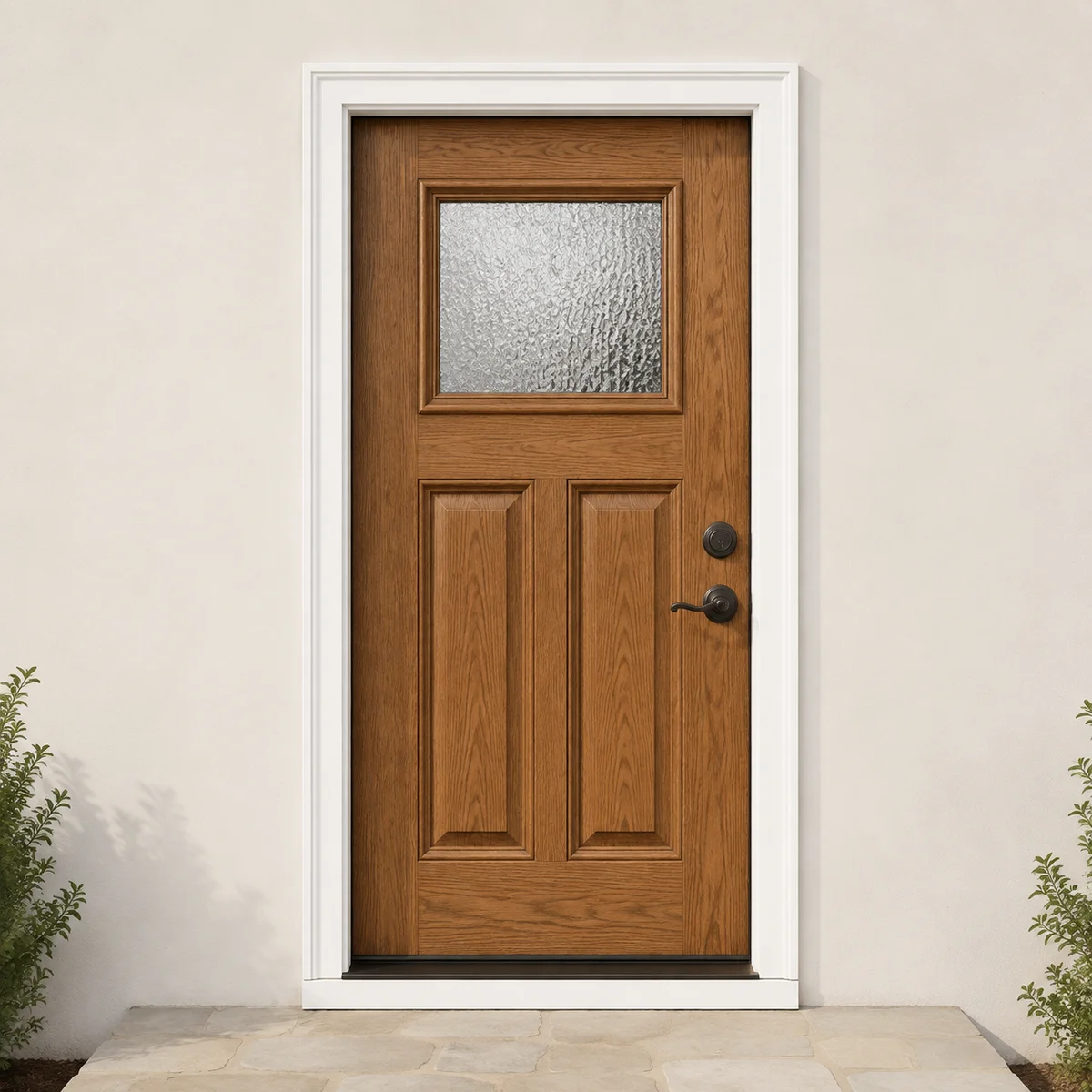
From style to a specific door
Use traditional fiberglass as the start of the design conversation, not a substitute for an exact model. Compare the door drawing, panel dimensions and glazing arrangement at the size proposed for your opening.
Refine the traditional design
Traditional fiberglass offers a choice between a smoother painted direction and a textured surface where the selected model supports it. Compare the panel moulding and the texture together. A convincing wood-look composition depends on the actual grain and finishing system, not only a brown colour.
For decorative glass, review how its perimeter fits within the moulded panels. A tall insert and a smaller upper insert leave different amounts of visible surface. The surrounding sidelites and transom should complement that balance rather than being selected as unrelated accessories.
Design details to approve
| Element | Decision |
|---|---|
| Panel layout | Compare defined or raised-panel proportions at the actual slab size. |
| Glass placement | Choose the insert area before selecting a decorative pattern. |
| Sidelites | Coordinate the height and rhythm of the glass with the main leaf. |
| Hardware | Check scale and finish against the panel detail and casing. |
Texture, grain and finish
Take a textured sample toward natural light and compare the finish on raised and recessed areas. The interior face may need a different visual relationship with the hallway, so confirm which finish combinations are approved for the specific fiberglass model.
See the details in person
Record the surface texture, finish process and glass collection with the door identifier. Ask for the applicable care guidance; a stained textured surface and a smooth painted fiberglass surface do not necessarily use the same maintenance procedure.